
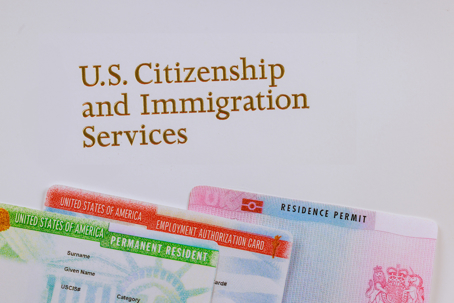
The recent USCIS policy memo on Adjustment of Status (AOS) as a matter of discretion has created significant concern among immigrants, attorneys, and families pursuing green cards from within the United States. While adjustment of status has always been a discretionary benefit under immigration law, the language and guidance in this new memo suggest that USCIS may begin applying a much stricter standard when deciding these cases. In particular, the memo appears to encourage officers to place greater emphasis on negative discretionary factors, potentially making it more difficult for certain applicants to obtain lawful permanent residence through the adjustment process.
This development has raised serious legal and practical questions. Below, we address some of the most common questions surrounding the new USCIS policy memo, explain what the law currently says about adjustment of status eligibility, discuss potential legal challenges to the guidance, and outline what applicants should expect moving forward.
Navigating immigration matters can be complex—get trusted guidance today. Call (888) 915-5057 or reach out online to schedule your consultation with a Columbus immigration attorney.
Does the new USCIS Policy Memo on Adjustment of Status as a Matter of Discretion change the legality of applying for a green card within the United States?
Adjustment of status has always been granted on a discretionary basis, meaning that even if you qualify under the statutory requirements, USCIS can determine whether to grant the benefit, based on the totality of circumstances. This memo does not have the power to change the statute governing adjustment of status, and the guidance relies on language from several cases that precede the current law to suggest that congress did not intend for aliens to adjust under normal circumstances. It looks like USCIS is unlawfully trying to create an additional standard requiring a showing of “unusual or even outstanding equities” for adjustment applicants, relying on language from a BIA case from the 1970s. Matter of Blas, 15 I&N Dec. 626, 628 (BIA 1974; A.G. 1976).
What does the law actually say about the availability of Adjustment of Status for individuals in the United States?
8 USC 1255(a) states:
The status of an alien who was inspected and admitted or paroled into the United States or the status of any other alien having an approved petition for classification as a VAWA self-petitioner may be adjusted by the Attorney General, in his discretion and under such regulations as he may prescribe, to that of an alien lawfully admitted for permanent residence if (1) the alien makes an application for such adjustment, (2) the alien is eligible to receive an immigrant visa and is admissible to the United States for permanent residence, and (3) an immigrant visa is immediately available to him at the time his application is filed. 8 USC 1255: Adjustment of status of nonimmigrant to that of person admitted for permanent residence
Current regulations allow any alien who is physically present in the United States, except for an alien who is ineligible or restricted, to apply for adjustment of status to that of a lawful permanent resident of the United States if the applicant is eligible to receive an immigrant visa and an immigrant visa is immediately available at the time of filing of the application. eCFR :: 8 CFR 245.1 -- Eligibility.
There are also very specific provisions for disqualifying someone from eligibility, as well as clear statutory exemptions for immediate relatives of US citizens who have violated status. INA § 245(c). This suggests that the new policy is at odds with the intent of congress when they passed the INA.
What are some of the possible legal challenges to the recent policy memo?
There is a strong argument that this memo ignores the intent of the current law using misleading excerpts from old cases. It also appears that USCIS is trying to exceed the scope of its authority by applying standards that don’t appear in the regulations, without going through the proper procedures set out in the Administrative Procedures Act, which requires regulatory rule changes to go through a process of public notice and comment. It also instructs USCIS to consider whether the alien could have used consular processing instead of AOS as a negative discretionary factor, which is clearly at odds with the language and intent of the INA.
What does the memo actually change?
The body of the memo instructs officers to weigh all relevant factors, including family ties, immigration status and history, moral character, and other relevant considerations to determine whether an applicant warrants favorable discretion. It is important to note that the guidance section of the memo does not mention “extraordinary circumstances,” only heightened scrutiny of relevant factors. If USCIS issues a denial, they must still explain their specific reasons, which includes an analysis of positive and negative factors, if the reason for denial is an unfavorable exercise of discretion. That leaves the door open to challenge arbitrary and capricious denials or abuses of discretion.
What does this mean in terms of how we should proceed with our case?
When filing for AOS we will need to highlight all factors that support favorable discretion. In complex cases where applicants are out of status or have previous immigration violations, those circumstances will be construed as negative factors. We may need to explain why applicants are using the AOS process rather than consular processing, pointing to specific, individual circumstances.
We expect more scrutiny on spousal cases where the applicant came on a visitor visa and subsequently got married. We also expect more scrutiny of cases where the applicant is present on a nonimmigrant visa that does not allow immigrant intent.
AOS may be more complex in some circumstances and may require litigation if we receive an unlawful denial.
Do not navigate the immigration process without reliable legal support. Call (888) 915-5057 or schedule your consultation with a Columbus immigration lawyer.